
Buying a crane across borders involves more than comparing lifting capacity and quoted prices. Global buyers must assess engineering details, supplier reliability, documentation, and long-term operating costs. This is where Crane Inside offers practical value: it looks beyond polished brochures and examines how equipment performs in real workplaces. A 20-ton overhead crane may appear suitable, yet runway dimensions, duty class, power supply, and local working conditions can change the decision completely.
Small details matter. Ask for load charts, motor specifications, brake information, inspection records, and clear warranty terms. Check whether the manufacturer has completed similar installations in comparable industries. Site photographs can reveal useful facts, such as limited headroom, exposed dust, or difficult maintenance access. Independent inspections and traceable certificates also help reduce avoidable purchasing risks. However, no checklist is perfect. A supplier may provide complete documents while offering weak after-sales support. A lower price may also hide installation delays, unavailable spare parts, or expensive training requirements.
Experience suggests that reliable buyers verify each claim instead of trusting attractive promises. They confirm communication channels, delivery responsibilities, commissioning procedures, and service response times before signing contracts. Regional standards and qualified professionals should guide compliance decisions. The best purchase is not always the cheapest crane. It is the crane that can lift safely, operate consistently, and remain supportable throughout its working life. These seven Crane Inside tips provide a realistic starting point, while careful judgment remains essential.
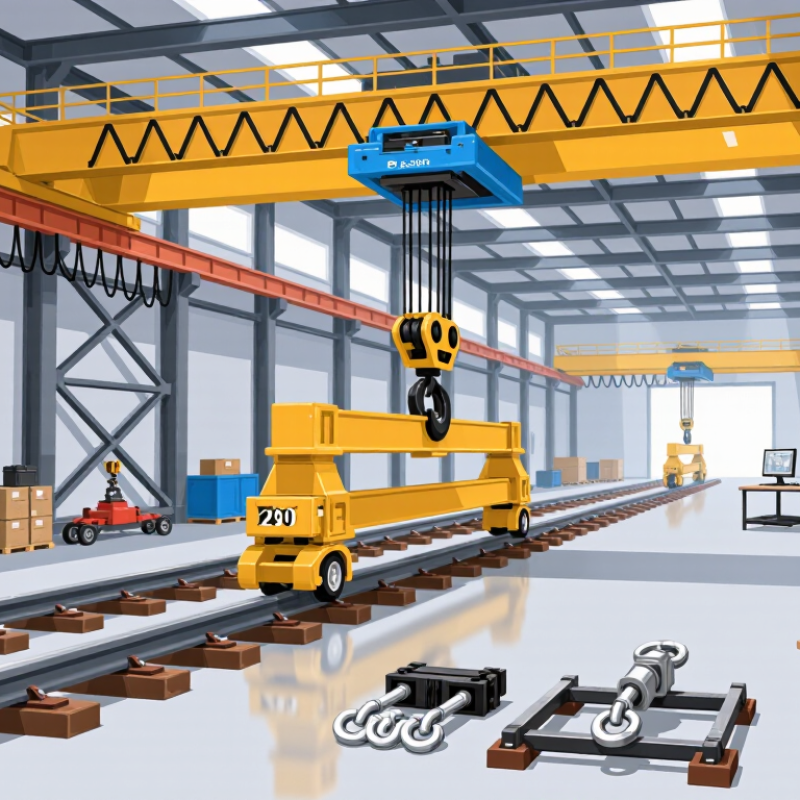
Match the crane type to the work, not the sales description. Overhead cranes suit indoor production lines, while gantry cranes support open yards and shipyards. Jib cranes help with repeated lifting near a workstation. Tower cranes serve tall construction sites, but their installation needs careful planning. Tip one is simple: define the application before requesting prices. Record the maximum load, lifting height, span, travel distance, and load shape. A clear load chart prevents costly assumptions.
Check the duty cycle, speed, and working environment. A crane lifting steel coils all day needs different equipment from one moving occasional maintenance parts. Dust, heat, humidity, corrosive air, and limited headroom can change the specification. I have seen buyers focus on capacity and overlook floor strength or power quality. That mistake can delay installation. Leave room for honest review. Your first specification may be incomplete.
Global buyers should request drawings, inspection records, manuals, spare-parts lists, and test procedures. Documents should use clear units and explain electrical requirements. Confirm the supplier can support commissioning, operator training, and local inspections. Ask how service calls are handled across borders. Compare the total ownership cost, not only the purchase price. A lower quote may hide transport, installation, or replacement costs. Experienced procurement teams also verify references from similar applications. Small details matter. Availability, language, packaging, and delivery conditions can affect the entire project.

Global crane buyers often start with rated capacity, but capacity alone can mislead. A 10-ton crane may lift 10 tons only under specific conditions. Check the load chart, lifting radius, duty class, and operating frequency. Ask whether the stated capacity includes the hook, spreader, or other lifting tools. Small details matter. On real projects, the heaviest load is not always the hardest lift. Wind, uneven ground, and limited headroom can reduce safe working capacity.
Request full technical documents before comparing prices. These should include motor power, hoisting speed, travel speed, control method, brake type, wheel load, and power requirements. Verify dimensions against your building drawings, especially runway width, hook approach, and maintenance clearance. I have seen buyers approve a crane that fit the bay but blocked a service passage. That mistake was avoidable, yet common. Safety documents should identify applicable standards, inspection procedures, emergency stops, and overload protection. Depending on location, requirements may involve ISO, EN, ASME, or national regulations. Certification does not replace site compliance.
Ask for traceable test records, material certificates, welding reports, and commissioning checks. A certificate without a clear scope deserves questions. Confirm the supplier’s experience with similar loads and climates. Salt air, freezing temperatures, and dust require different protection levels. Request training for operators and maintenance staff, not only manuals. I would also budget for inspections and spare parts early. The cheapest specification may become expensive downtime. Recheck every assumption with a qualified local engineer.
| No. | Evaluation Area | Practical Buyer Check | Reference Data or Example | Relevant Standard or Technical Basis | Documentation to Request |
|---|---|---|---|---|---|
| 1 | Confirm Rated Capacity | Match the safe working load to the heaviest planned lift, including the lifting device and any below-the-hook attachment. | Example: a 10 t crane should not be used for a 10 t load when the lifting beam, hook block, or other accessories add extra weight. | Rated capacity is the maximum permitted lifted load under the stated operating conditions. The load chart and nameplate must agree with the design. | Load chart, nameplate details, load calculation, and accessory-weight records. |
| 2 | Evaluate Duty Classification | Select the duty class from actual operating cycles rather than from lifting capacity alone. | For intermittent workshop service, an ISO 4301-1 classification such as M4 or M5 may be appropriate; frequent, intensive production may require a higher class after engineering review. | ISO 4301-1 considers the total operating time and load spectrum. FEM classifications may also be used where accepted by the buyer’s jurisdiction. | Duty-class calculation, expected starts per hour, average load spectrum, and design working hours. |
| 3 | Check Span, Lift, and Travel | Verify the runway span, hook height, cross-travel distance, long-travel distance, and required approach dimensions against the building layout. | Illustrative specification: 20 m span, 8 m lifting height, 18 m long-travel path, and 5 m/min hoisting speed. Final values must come from the site survey. | Structural clearances must account for the crane girder, trolley, hook block, power supply, roof structure, and maintenance access. | Approved layout drawing, dimensional drawing, site survey, headroom calculation, and runway alignment requirements. |
| 4 | Verify Structural and Wheel Loads | Ask whether the building columns, runway beams, foundations, and end stops can withstand the maximum vertical and horizontal forces. | The maximum wheel load is not equal to rated capacity; it also depends on crane self-weight, trolley position, impact factors, and wheel spacing. | The supporting structure should be checked by a qualified structural engineer using the crane supplier’s maximum wheel loads and applicable local design rules. | Maximum wheel-load table, runway reactions, rail tolerances, anchor details, and structural approval. |
| 5 | Review Safety Functions | Confirm overload protection, upper and lower hoist limits, emergency stop, travel limits, brakes, audible warning, and anti-collision controls where required. | A two-stage hoist limit arrangement is commonly used for normal stopping and final protective stopping; the exact configuration depends on the design and risk assessment. | Typical references include ASME B30.2 for overhead and gantry cranes, EN 15011 for bridge and gantry cranes, and ISO 13849-1 for safety-related control systems where applicable. | Risk assessment, safety-circuit diagram, functional-test procedure, emergency-stop test record, and safety-device certificates. |
| 6 | Match Electrical and Environmental Requirements | Specify supply voltage, frequency, control voltage, enclosure protection, temperature range, corrosion exposure, hazardous-area classification, and operating altitude. | Common industrial supplies include 400 V, 50 Hz, three-phase power, but the correct value must be taken from the installation site. | IEC 60204-32 addresses electrical equipment of lifting machines. IP ratings should be selected according to dust, water, washdown, and outdoor exposure. | Electrical schematic, motor data, protection rating, cable schedule, environmental limits, and hazardous-area compliance statement if applicable. |
| 7 | Plan Inspection, Testing, and Maintenance | Define acceptance testing, periodic inspection, spare parts, lubrication, operator training, and service response before placing the order. | Initial commissioning should include no-load and rated-load functional checks; inspection intervals must follow local law, risk level, usage, and the manufacturer’s instructions. | ISO 9927 provides general crane inspection principles. Local regulations may require documented thorough examinations and competent-person inspections. | Factory test report, commissioning checklist, inspection schedule, maintenance manual, spare-parts list, training records, and conformity documentation. |
Note: Example dimensions and classifications are for preliminary comparison only. The final crane selection must be confirmed through a site-specific engineering review, applicable national regulations, and a documented risk assessment.
Global crane buyers often compare price first, but the cheapest quotation can become expensive during installation. Compare manufacturers through documented experience, not polished brochures. Request project references with similar lifting capacity, span, duty class, and working environment. A factory audit can reveal welding quality, testing equipment, spare-parts storage, and production discipline. Ask how the supplier records design changes and handles delayed components. Small details matter.
Quality certifications need careful inspection. An ISO 9001 certificate supports process control, but it does not prove every crane is suitable. Check the certificate’s scope, validity, issuing organization, and site address. Review material certificates, weld inspection reports, load-test records, and electrical documentation. Local compliance may require additional standards or inspections. Ask for evidence, not promises. A certificate copied into a proposal proves very little.
Customization should begin with operating conditions. Specify rated load, lifting height, span, duty cycle, travel distance, indoor or outdoor use, temperature, dust, humidity, and available power. Controls, brakes, festoon systems, pendant stations, and maintenance platforms also affect safety and cost. Leave room for future capacity only when the structure supports it. I have seen buyers request unnecessary features while overlooking access for routine servicing. My own comparison sheets can become too detailed, so I now rank risks by consequence, evidence, and lifecycle cost. A reliable supplier explains trade-offs clearly and records every agreed specification before production.
A practical 1–5 priority framework for comparing manufacturers, certifications, safety, and customization options.
Use this checklist when comparing suppliers: verify relevant quality systems such as ISO 9001, confirm local conformity requirements such as CE where applicable, match the crane to its rated load and duty cycle, and request documented details for controls, lifting height, span, operating environment, spare parts, and service support. Priority levels are a procurement guide rather than market-share statistics; certification requirements depend on the destination country, crane type, and project scope.
7 Crane Inside Tips for Global Buyers
Verifying Costs, Shipping Terms, Installation, and After-Sales Support
Tip 1: Request a line-by-line quotation covering the crane, controls, testing, packing, and inland delivery. Numbers can mislead. Confirm taxes, port charges, insurance, and currency risks before approving the purchase. Tip 2: Check the rated load, span, lifting height, duty class, and working environment against your actual operation. A lower price may reflect lighter components or limited duty cycles. Ask for drawings, load charts, inspection records, and electrical specifications.
Tip 3: Read the shipping term carefully, including the named port or destination. Ask who pays. Confirm loading responsibility, export documents, marine insurance, and damage reporting procedures. Tip 4: Verify site requirements before production begins. Measure runway alignment, floor strength, power supply, headroom, and access for assembly equipment. Installation delays often come from missing measurements, not complex engineering. Tip 5: Clarify what installation includes. The contract should identify labor, supervision, commissioning, testing, training, and travel expenses. Get it written. A vague “installation included” clause can create expensive disputes.
Tip 6: Examine the after-sales plan in practical detail. Confirm spare-parts availability, remote troubleshooting, service response times, warranty limits, and technician qualifications. Request a preventive-maintenance schedule and emergency contact process. Tip 7: Check whether local operators can use and maintain the equipment safely. Translated manuals, training records, and clear control labels matter. I have seen buyers focus heavily on purchase price and underestimate downtime. That judgment deserves review. Ask for references from similar operating conditions, while remembering that one successful project does not prove universal reliability.
7 Crane Inside Tips for Global Buyers
Avoiding Common Purchasing Risks in International Crane Transactions
Global crane purchases can fail long before the equipment reaches the port. Verify the supplier’s legal registration, factory address, and recent project records. Ask for dated inspection photos, not polished catalog images. Check the crane’s lifting capacity against the actual load chart and working radius. Small errors matter.
Request complete technical documents before discussing final payment. These should include drawings, motor data, control logic, material certificates, and maintenance instructions. Confirm voltage, frequency, rail dimensions, hook type, and environmental conditions. A mismatch can stop installation immediately. I once underestimated local humidity in a planning exercise; that mistake changed the required protection level. Recheck every assumption.
Use an independent inspector for welding, electrical systems, brakes, and load testing. Require a written acceptance procedure with measurable limits. Review packing methods, corrosion protection, spare parts, insurance, and delivery responsibilities. Never rely on verbal promises about commissioning support. Clarify payment stages, warranty coverage, response times, and excluded costs. Keep every revision in one signed document. A cheaper offer may hide expensive installation work. That is easy to miss. Also inspect the export documents and customs descriptions before shipment. Missing or inaccurate paperwork can create delays, storage charges, or disputes. Ask practical questions, even basic ones. Careful buyers are not difficult buyers.