Yongmao Used Tower Crane for Sale from China
The market for pre-owned lifting equipment is becoming more selective, not merely cheaper. International rental and construction-equipment reports from the European Rental Association and Off-Highway Research show continued demand for used machines, supported by equipment costs, infrastructure investment, and rental-fleet renewal. However, published market figures often combine mobile cranes, tower cranes, and other machinery. That limitation matters.
A Yongmao Used Tower Crane can offer practical value when its history is transparent. Buyers should inspect the slew ring, hoist gearbox, wire ropes, mast sections, trolley system, electrical cabinet, and load-moment limiter. A clean paint finish is not proof of good condition. The real evidence may be inside a service log, beside a dated inspection label, or beneath a gearbox cover. KHL Group lifting-equipment editor Alex Dahm has expressed a useful industry principle: “Condition, documentation, and technical support decide value—not age alone.” That view should guide every evaluation.
This introduction examines how to assess a Yongmao Used Tower Crane before purchase, relocation, or rental deployment. It considers manufacturing specifications, working history, parts availability, inspection procedures, transport requirements, and operator safety. Yongmao’s reputation in tower-crane manufacturing provides a useful starting point, but reputation cannot replace verification. Buyers should compare serial numbers, rated capacities, configuration drawings, maintenance records, and independent inspection findings. Some advertised savings may disappear after missing components or corrosion repairs are discovered. The uncomfortable truth is simple: the cheapest crane is not always the lowest-cost crane.
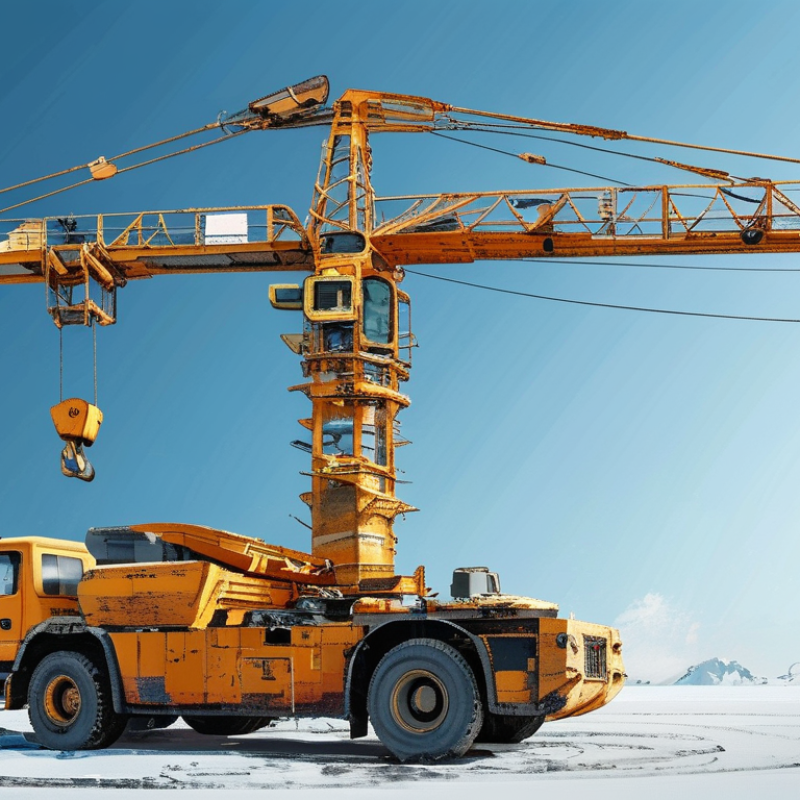
Yongmao Used Tower Cranes from China: Models, Applications, and 4–20 t Loads
Used tower cranes from China can support mid-rise housing, industrial plants, warehouses, and infrastructure projects. Typical configurations include flat-top, hammerhead, and luffing-jib models. Flat-top cranes suit open sites with repeated lifting paths. Luffing-jib cranes work better beside dense buildings or restricted airspace. Models rated from 4 to 20 tonnes cover many material-handling needs. A 4–8-tonne crane may place formwork and pallets efficiently. Larger 10–20-tonne units can handle steel sections, precast panels, and heavy mechanical equipment. Oxford Economics’ Global Construction 2030 study projected global construction output could reach 15.5 trillion dollars by 2030. Demand remains substantial. Yet, that forecast cannot replace a project-specific lifting plan.
Buying used equipment requires documented evidence, not attractive photographs.
Check the load chart, serial records, inspection history, rope condition, brakes, slewing ring, mast sections, and foundation design. An independent engineer should verify capacity after transport and reassembly. The International Labour Organization notes that construction workers face a significantly higher fatality risk than workers in many other sectors. Small defects matter. UNEP’s 2023 Global Status Report links buildings and construction with roughly 37% of global energy-related and process emissions. Selecting a correctly sized crane can reduce unnecessary operating time, though this is not guaranteed. Site wind limits, operator competence, local standards, and spare-part access still determine practical reliability. A careful buyer should leave room for doubt.
Technical Specifications: Jib Length, Load Moment, Hoisting Speed, and Tip Load
Yongmao Used Tower Crane for Sale from China
When inspecting a used tower crane, I start with the jib length and load moment. Jib length defines the working radius. A longer jib covers more ground, but it also increases structural demand. Load moment combines lifting capacity and reach, usually measured in tonne-metres. For example, a 50-metre jib lifting 2 tonnes creates a 100 tonne-metre moment. The actual rating must come from the manufacturer’s load chart and inspection records.
Hoisting speed affects daily productivity. A high-speed setting can move lighter loads efficiently, while heavy loads require slower, controlled lifting. Check whether the crane offers multiple speed ranges, smooth braking, and stable lowering. Tip load is equally important. It is the maximum permitted load at the jib tip, not the maximum load near the tower. A crane may lift 8 tonnes close in, but only 1.2 tonnes at full reach. That difference is often misunderstood.
I would also compare the stated specifications with the crane’s current condition. Measure rope wear, inspect welds, and review service history. Test the hoist under supervision, not only through paperwork. Some older units appear economical, yet outdated controls or missing records can increase project costs. A small documentation gap matters. Independent inspection is worthwhile before shipment, installation, and operation. Local foundation design and site conditions can still change the safe working configuration.
Yongmao Used Tower Crane for Sale from China - Technical Specifications: Jib Length, Load Moment, Hoisting Speed, and Tip Load
Representative technical specifications for commonly traded used tower-crane configurations. Actual values may vary according to configuration, counterweights, reeving, and inspection condition.
| Crane Class |
Maximum Jib Length |
Maximum Load |
Maximum Load Moment |
Hoisting Speed |
Tip Load at Maximum Jib |
Typical Free-Standing Height |
Mast Section |
Installed Motor Power |
| Light-Duty 4 t |
45 m |
4,000 kg |
500 kN·m |
0–80 m/min |
1,100 kg |
35 m |
1.6 × 1.6 m |
37 kW |
| Medium-Duty 6 t |
50 m |
6,000 kg |
800 kN·m |
0–90 m/min |
1,600 kg |
40 m |
1.6 × 1.6 m |
45 kW |
| General Construction 8 t |
55 m |
8,000 kg |
1,000 kN·m |
0–100 m/min |
1,800 kg |
45 m |
1.8 × 1.8 m |
55 kW |
| Heavy-Duty 10 t |
60 m |
10,000 kg |
1,250 kN·m |
0–110 m/min |
2,100 kg |
50 m |
2.0 × 2.0 m |
75 kW |
| High-Capacity 12 t |
65 m |
12,000 kg |
1,600 kN·m |
0–120 m/min |
2,400 kg |
55 m |
2.0 × 2.0 m |
90 kW |
| Extra-Heavy 16 t |
70 m |
16,000 kg |
2,000 kN·m |
0–130 m/min |
2,700 kg |
60 m |
2.2 × 2.2 m |
110 kW |
Condition Assessment: Operating Hours, Maintenance Records, and 12-Month Inspections
Buying a used tower crane from China requires more than checking its appearance. Operating hours reveal workload, but they do not tell the entire story. An hour meter may show 8,000 hours, while repeated short lifts caused severe brake wear. Compare the meter with daily logs, service invoices, and lifting schedules. Inspect the hoist, slewing unit, trolley, and hydraulic systems under controlled operation. Listen for grinding sounds and watch for delayed braking.
Maintenance records should identify dates, replaced parts, lubricant changes, and technician findings. Missing pages deserve attention. Clean paperwork does not always mean clean machinery. Check welds, bolts, pins, wire ropes, drums, and electrical cabinets closely. Look for fresh paint around older cracks. That detail can be easy to miss. Ask for load charts, original manuals, previous inspection reports, and clear component photographs. Matching serial numbers across documents improves traceability.
A 12-month inspection should be completed by a qualified, independent engineer before purchase or installation. The inspection should include structural measurements, foundation connections, safety devices, limit switches, brakes, and emergency controls. Request a signed report with defects, measurements, test results, and repair recommendations. I would also ask whether the crane was stored outdoors, because moisture can damage hidden electrical contacts. Some assessments remain uncertain without dismantling key parts. Budget for that possibility. A low purchase price can become expensive when inspection evidence is incomplete.
Safety Compliance: EN 14439, ISO 9927, Load Charts, and Third-Party Testing
A used tower crane for sale from China should be assessed through documents and physical evidence. EN 14439 provides a practical reference for tower crane safety design and operation. Check whether the crane’s configuration matches its declared capacity. The load chart must show radius, lifting weight, hook position, and working limitations. A faded chart is not acceptable.
ISO 9927 supports systematic inspection procedures for cranes. Inspectors should review the mast sections, bolts, slew ring, wire rope, brakes, trolley, and electrical cabinet. Look for unusual metal dust near the slew ring. Check welds for cracks, not only surface rust. A clean coat of paint proves little. Maintenance records should identify inspection dates, replaced parts, and operating hours.
Independent third-party testing adds useful confidence before shipment. The testing body should verify structural condition, safety devices, limit switches, emergency stops, and load performance. Test results should include the crane’s serial details and tested configuration. Photos of measured deflection and brake response can improve traceability. However, paperwork may still contain gaps. One inspection cannot reveal every hidden repair. Buyers should compare the load chart with the actual jib length and counterweight arrangement. Local site engineers must also confirm foundation requirements, wind limits, power supply, and operator competence before installation. Safety depends on careful verification, not attractive pricing.